Biography
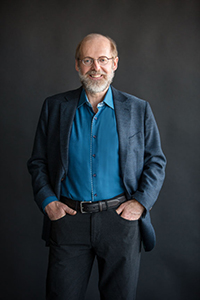
Dr. Carl O. Pabo received his B.S. from Yale in 1974 (summa cum laude) and his Ph.D. from Harvard in 1980. For several decades, he focused on the structure and design of DNA-binding proteins, with appointments as a Professor at the Johns Hopkins University School of Medicine (1982–1991) and MIT (1991–2001), and as an Investigator with the Howard Hughes Medical Institute (1986–2001). For his contributions to molecular biophysics, he was elected to the National Academy of Sciences and to the American Academy of Arts and Sciences.
Impelled by deeper questions about human thought and the prospects for the human future, he then resigned his academic appointments and read as widely as he could across neurobiology, psychology, economics, history, philosophy, mathematics, political science, and current affairs. In those years, Dr. Pabo held a Guggenheim Fellowship for work on “Theories of Thought” and appointments as a Visiting Professor at Caltech, Stanford, Berkeley, and the Harvard Medical School. Rather than simply learning the key ideas in each field, he attempted a dual-mode analysis: understanding the theories themselves, and at the same time working to trace the flow of neural and cognitive events that had produced them.
As this work proceeded, Dr. Pabo recognized a critical gap between human cognitive capacity and the challenges of planning and governance amid the complexity of the modern world. Closing that gap will not be easy, but he takes it as the most fundamental challenge of the human future, and he focused on this crisis of complexity when he returned to Caltech as a Visiting Professor in 2017 and taught a course on “The World in 2050.”
Building on these insights, Dr. Pabo founded Humanity 2050, a nonprofit institute that developed several new strategies for addressing the challenges of the Anthropocene. He closed the institute in 2023, and work on its underlying ideas has moved faster since. He served as the 2025 Andrew W. Marshall Foundation Scholar, and he now focuses on developing and implementing new “tools for thought” designed to help society think more clearly, plan more carefully, and build a better future.
He is now building and testing the first of these tools—his algorithm for thought—using AI to help with the research, run the tests, and keep the records (see “Current Work”). He had expected that this project would need a team of five to seven people and take several years; he now thinks he can set up the algorithm and start testing it in a few months. He is also writing a short book, “Escaping the Complexity Trap: Hope for the Human Future,” which explains the approach and how it can help humanity.
